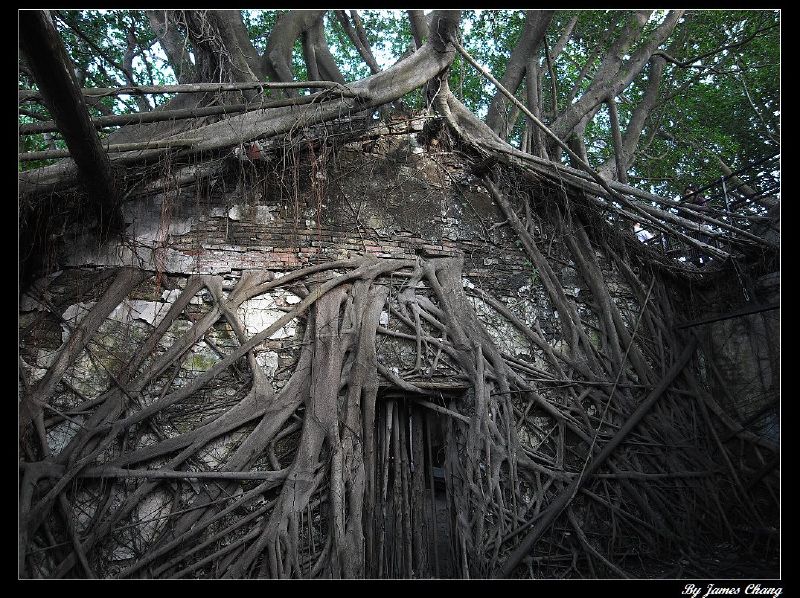
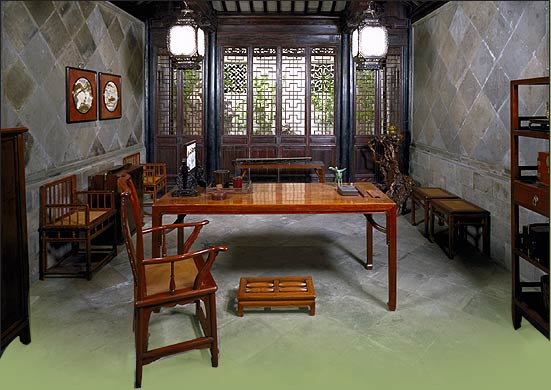
Put your nose near the screen at the midline of the image and use the cross-eye method. To see details, click on the image to view it larger.
This is a vue d'optique in progress.


[There] appeared a white gibbon with red eyes and red spots all over its fur, which stood two feet tall, and was holding some rock fungus in its hands.
'Look,' said Old Tuo. 'That must be a magic plant the gibbon is holding. Why don't we try to get it from him?'
He chased the gibbon down the road back, and Tang Ao followed. Soon, the gibbon disappeared into a cave, Tang Ao crawled in after it, and discovered that it was a very shallow one. Without much difficulty, he grabbed the gibbon and took the fungus from its hands and gave it to Old Tuo, who devoured it with great relish."


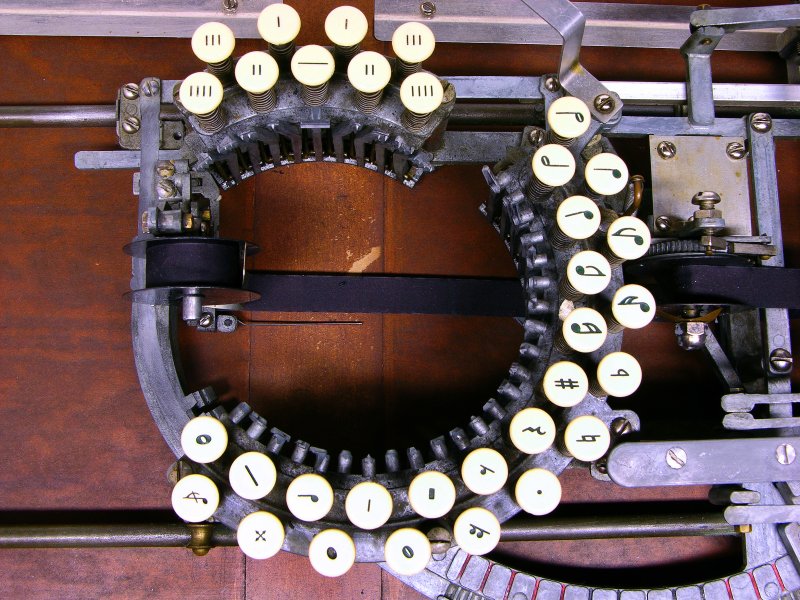
 Back when I didn't believe in owning computers, I foolishly pawned my hermes rocket, on which I wrote my first college essay. It was a 250 ft long page.






Peering through the tiny hole, I had the distinct feeling that I was looking at the other half of myself.




In the Chia-yü period [1056-1063], a "pearl" appeared in Yang-chou. It was very large and frequently appeared at night. At first it emerged from the swamps of T'ien-ch'ang county; later it moved to Pi-she Lake; and finally it was at Hsin-k'ai Lake. For more than ten years, residents and travelers would constantly see it.
My friend had a study by the lakeside and one night saw that the "pearl" was very near. At first it opened its door very slightly, and a light shot out from the crack like a golden ray. After a moment, it opened wider to the space of half a mat; within there was white light like silver. The "pearl" was as big as a fist and so bright you couldn't look at it directly. For over ten tricents, the trees cast shadows, exactly as when the sun has just come up. In the distance you saw only a sky reddened as if by a forest fire. All of a sudden it went far off, moving as if in flight, floating over the waves, shining like the sun.
In the past there was a "moongem," but its color was unlike th e moon' shimmering with sharp flames, it rather resembled the sun. Ts'ui Po-yi once wrote a "Rhapsody on the Bright Gem." Ts'ui was from Kao-yin and so must have seen it often.
In recent years, it hasn't appeared again; no one knows where it has gone. Fan-liang-chen is where the "pearl" used to appear, and when travelers reach there, they usually tie up their boats for a few nights to watch for its appearance. The pavilion there is called "The Playful Pearl."
Translated by Richard W. Bodman
Footnote: In Chinese folklore, pearls are endowed with the magic power to give off their own light, to protect their owner from sickness, and to repel water (when their owner is swimming).