Showing posts with label AsiaFile. Show all posts

2.05.2009

Lucy Zhao

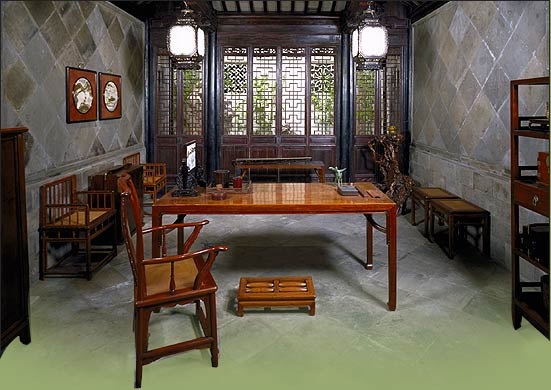
On my visits to Minneapolis, I try to stay the onslaught of Midwestern Boredom by visiting museums and parks. One of my favorite places to go is the Chinese scholar’s room at the Minneapolis Institute of Art. They have a rather tacky website for their Asian collections, as I found while looking for cricket ticklers.

But, now we can admire the scholar’s study cyber-spacially.


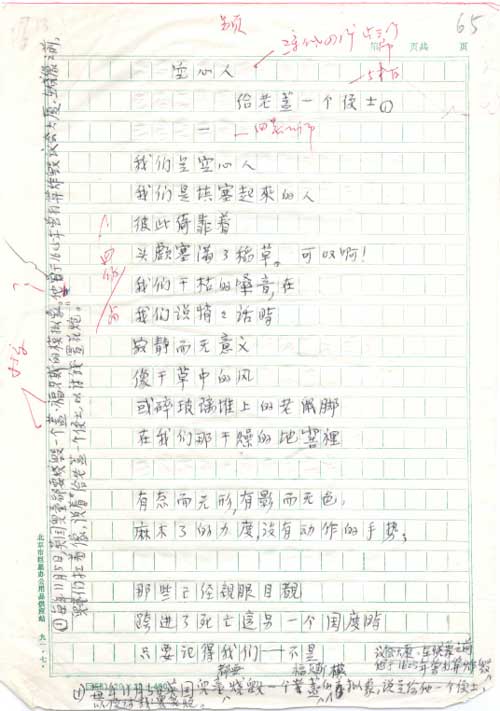
Lucy Zhao/Chao, or Zhao Luorui (someone else figure out the graphs), was the author of the first complete Chinese translation of Leaves of Grass, by Walt Whitman. She grew up in a courtyard-style home in Beijing, which later, after surviving the Cultural Revolution, succombed to demolition despite her brother’s spirited fight to preserve the 400 year old house. Their family furniture was donated to museums and private collections around the world.


One of a pair of folding chairs belonging to the Zhao family ended up in Minneapolis, in the collection I regularly pay my respects to. Sarah Handler’s book, Austere Luminosity of Chinese Classical Furniture (what a Chinese-sounding name for a book), describes the chair as “the property of Zhao Lourui” in her chapter on folding armchairs.


I’ve probably admired this chair at the museum. Lucy may well have translated Leaves of Grass sitting in it.


This is her handwriting.

11.01.2008

Treats for Tricks!

[On a UFO]
In the Chia-yü period [1056-1063], a "pearl" appeared in Yang-chou. It was very large and frequently appeared at night. At first it emerged from the swamps of T'ien-ch'ang county; later it moved to Pi-she Lake; and finally it was at Hsin-k'ai Lake. For more than ten years, residents and travelers would constantly see it.
My friend had a study by the lakeside and one night saw that the "pearl" was very near. At first it opened its door very slightly, and a light shot out from the crack like a golden ray. After a moment, it opened wider to the space of half a mat; within there was white light like silver. The "pearl" was as big as a fist and so bright you couldn't look at it directly. For over ten tricents, the trees cast shadows, exactly as when the sun has just come up. In the distance you saw only a sky reddened as if by a forest fire. All of a sudden it went far off, moving as if in flight, floating over the waves, shining like the sun.
In the past there was a "moongem," but its color was unlike th e moon' shimmering with sharp flames, it rather resembled the sun. Ts'ui Po-yi once wrote a "Rhapsody on the Bright Gem." Ts'ui was from Kao-yin and so must have seen it often.
In recent years, it hasn't appeared again; no one knows where it has gone. Fan-liang-chen is where the "pearl" used to appear, and when travelers reach there, they usually tie up their boats for a few nights to watch for its appearance. The pavilion there is called "The Playful Pearl."
Translated by Richard W. Bodman

Footnote: In Chinese folklore, pearls are endowed with the magic power to give off their own light, to protect their owner from sickness, and to repel water (when their owner is swimming).

Taken from The Columbia Anthology of Traditional Chinese Literature.

NOW FOR MY NEXT TRICK:


Click on the comment link to leave me the treats you now owe!

10.07.2008

Tang Ao's Mystical Fart


Sketches for an illustration project. I haven't quite got it right, yet. You'll see.


But I smell something fragrant....
Tang Ao followed the scent through the forest toward a precipice, and found a lovely vermilion plant of about two feet high growing from a crack in a rock on the roadside. After scrutinizing it, Tang Ao remembered a passage from an ancient book of nutrition which said, 'The vermilion plant resembles a dwarf mulberry bush. It has a coral coloured stalk with blood-red juice in it. Gold or jade, upon coming into contact with it, will dissolve into paste, called "gold paste" or "jade paste" depending on which is used. He who takes of this paste will leave the worldly existence and enter the region of Immortals.'
...He took a very small piece of jade from his head-scarf, and plucked the plant up...Laying it carefully between his palm and the piece of jade, he rubbed them together. Sure enough, it all melted into a brightly coloured red paste. He put this in his mouth, and immediately felt a fragrance permeate his brain, and was at once extremely invigorated....
'Well, you'll soon become an Immortal,' said Lin. "But why are you looking so miserable? Is it because you cannot bear the thought of leaving your family, or you quaver at the thought of joining the spirits?'
'I have a stomach-ache,' said Tang Ao. 'I don't know why.'
He had hardly finished speaking when there was a rumble in his stomach, a loud explosion, followed by an an appalling smell.

Clapping his hand over his nose, Lin cried, "Good! The vermilion plant has purged the impurities from your system! I wonder what else you have lost!'
Tang Ao kept saying, 'Strange! Strange! Just now, I could remember even the verses I composed as a child. Now I can remember only a tenth of it.'
'That is strange indeed,' said Old Tuo.
'Doubtless nine-tenths of your learning went out with that break of wind,' said Lin. 'The one-tenth you retain must be the inoffensive part. If you put it down on paper it will all be good....'

4.06.2008

Night Tremors of the Sleeping Giant, part 1


Scratches on the surface of the variety of influences on Chinese culture and identity. Internal, adjacent, tangential.

Text is taken from the description of one video of a Tibetan woman singing in competition on TV in China:

To win a medal at the National Singing Contest, the following criteria should be met.
1. The singing technique should be excellent.
2. The singing performance should be affecting. That is, if the singer sings a love (or sorrowful) song, the audience should feel that their hearts are full of love (or sorrow).
3. The singer should be the best singer (or at least one of the best singers) among all those who can use the same singing technique in the world.
4. Since this National Singing Contest is not for a single ethnic group, but for all Chinese ethnic groups, so the singer should show the most beautiful part of her ethnic culture during her performance. And the audience should be shocked by the beauty of her ethnic culture.


Nationalism is a strange beast.

4.04.2008

Double-Take Image - 24 Stories of Filial Piety


7. Filial Piety of Yen Tzu (1122 B.C.)

Yen Tzu's parents are old and have eye trouble. The doctor recommends treating them with deer milk. Yen Tzu wears the fur of a fawn to assume the form of a child of a deer. In this way he really gets some milk. His parent's eyes feel better. He has to get more again. Once he meets a hunter who mistakes him as a real fawn and is about to shoot him. He cries loudly and tells the hunter the truth and so is saved.

Nothing cannot be gotten by a son with filial piety. Readers will find some more examples in this small booklet. It is not that those good sons really possess supernatural powers but that they are always helped by the Buddhas, Bodhisattvas, Gods, and All Protectors.

His parents do like to drink the milk of deer,
They do not know the price of it's dear.
He must wear the fur of fawn,
Almost is killed by the hunter with fear.


Text taken from the Website of Buddhist Yogi C. M. Chen. It's worth looking around the site if you're interested in other realms.

3.28.2008

Each With His Own Brush

...from a book of the same title, by Daniel Johnson Fleming. I have been meaning to scan these images for months. It was hard to choose which ones to post. They are painted by Chinese artists, except for the Five Japanese Martyrs.
I photocopied the Self-Realization Magazine during college.


2.18.2008

湘妃竹 at a measured pace

Finally, a few good konghou videos showing up. This song has special significance to me.

1.10.2008

Chinese "Tapestry Poem" Palindrome

    琴清流楚激弦商秦曲发声悲摧藏音和咏思惟空堂心忧增慕怀惨伤仁
    芳廊东步阶西游王姿淑窕窈伯邵南周风兴自后妃荒经离所怀叹嗟智
    兰休挑林阴翳桑怀归思广河女卫郑楚樊厉节中闱淫遐旷路伤中情怀
    凋翔飞燕巢双鸠土迤逶路遐志咏歌长叹不能奋飞妄清帏房君无家德
    茂流泉情水激扬眷颀其人硕兴齐商双发歌我兖衣想华饰容郎镜明圣
    熙长君思悲好仇旧蕤葳粲翠荣曜流华观冶容为谁感英曜珠光纷葩虞
    阳愁叹发容摧伤乡悲情我感伤情徵宫羽同声相追所多思感谁为荣唐
    春方殊离仁君荣身苦惟艰生患多殷忧缠情将如何钦苍穹誓终笃志贞
    墙禽心滨均深身加怀忧是婴藻文繁虎龙宁自感思岑形荧城荣明庭妙
    面伯改汉物日我兼思何漫漫荣曜华雕旗孜孜伤情幽未犹倾苟难闱显
    殊在者之品润乎愁苦艰是丁丽壮观饰容侧君在时岩在炎在不受乱华
    意诚惑步育浸集悴我生何冤充颜曜绣衣梦想劳形峻慎盛戒义消作重
    感故昵飘施愆殃少章时桑诗端无终始诗仁颜贞寒嵯深兴后姬源人荣
    故遗亲飘生思愆精徽盛翳风比平始璇情贤丧物岁峨虑渐孽班祸谗章
    新旧闻离天罪辜神恨昭感兴作苏心玑明别改知识深微至嬖女因奸臣
    霜废远微地积何遐微业孟鹿丽氏诗图显行华终凋渊察大赵婕所佞贤
    冰故离隔德怨因幽元倾宣鸣辞理兴义怨士容始松重远伐氏妤恃凶惟
    齐君殊乔贵其备旷悼思伤怀日往感年衰念是旧愆涯祸用飞辞恣害圣
    洁子我木平根尝远叹永感悲思忧远劳情谁为独居经在昭燕辇极我配
    志惟同谁均难苦离戚戚情哀慕岁殊叹时贱女怀叹网防青实汉骄忠英
    清新衾阴匀寻辛凤知我者谁世异浮奇倾鄙贱何如罗萌青生成盈贞皇
    纯贞志一专所当麟沙流颓逝异浮沉华英翳曜潜阳林西昭景薄榆桑伦
    望微精感通明神龙驰若然倏逝惟时年殊白日西移光滋愚谗漫顽凶匹
    谁云浮寄身轻飞昭亏不盈无倏必盛有衰无日不陂流蒙谦退休孝慈离
    思辉光饬粲殊文德离忠体一违心意志殊愤激何施电疑危远家和雍飘
    想群离散妾孤遗怀仪容仰俯荣华丽饰身将与谁为逝容节敦贞淑思浮
    怀悲哀声殊乖分圣赀何情忧感惟哀志节上通神祗推持所贞记自恭江
    所春伤应翔雁归皇辞成者作体下遗葑菲采者无差生从是敬孝为基湘
    亲刚柔有女为贱人房幽处己悯微身长路悲旷感生民梁山殊塞隔河津


This is the Tapestry Poem mentioned in Flowers in the Mirror. Lin Tai-Yi provides this explanation in the Notes:
The Tapestry poem is the pride and joy of Li Ju-Chen. It is, unfortunately, impossible to translate. The poem may be read backwards and forwards, up and down, in squares, whorls, diagonally, and in a dozen other combinations.

So, it is not a palindrome in the sense that the lines read the same in every direction, but the characters are placed in sequence which has meaning in relation to those around it. Please comment if there is a more correct term!
Although I rue the day (age 5?) I told my dad I didn't want to learn Chinese anymore, and thus can't translate any of it, this website appears to list poems contained within the Tapestry. It was found in this post:
The story of this tapestry apparently predates the novel, going back as early as a story about a Jin dynasty woman who crafted the 841 character weaving with 200-odd poems. I don't know if the author of "The Flowers in the Mirror" used an existing matrix or wrote his own. The novel, in any event, abounds with jokes, old legends, and linguistic curiosities--there's a great joke about a man named Wang and how he names his eight sons, for example.

In re other qishi: Su Dongpo was a poet known for his palindromes, among other things.
Posted by: zhwj at May 11, 2004 10:23 PM